
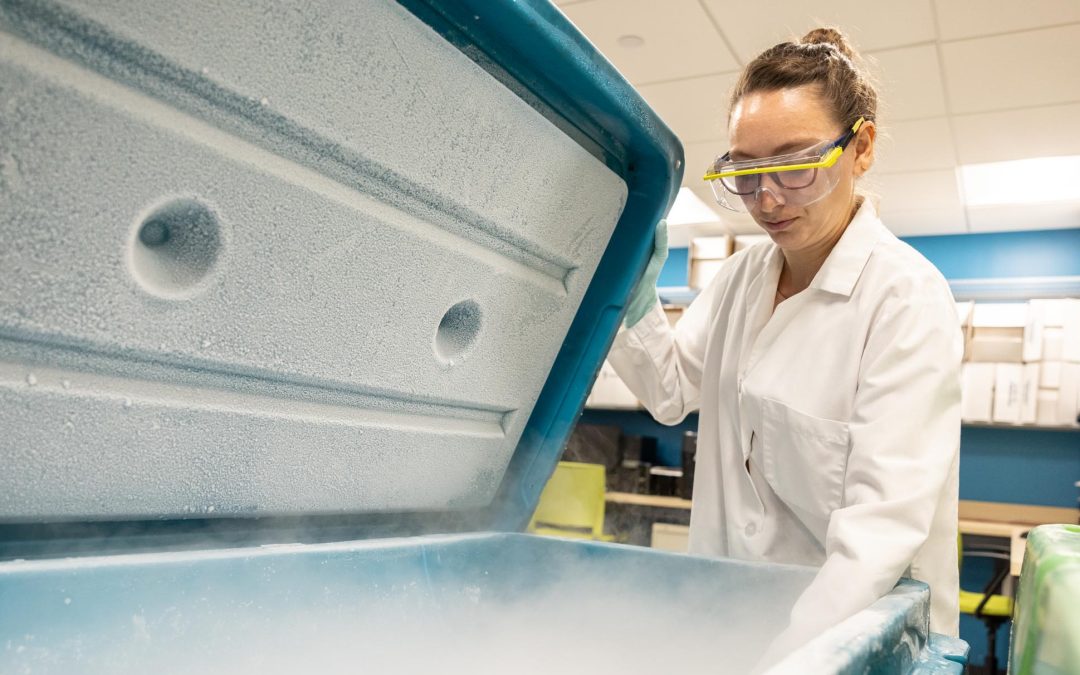
Biobanks provide access to human biospecimens that enable advances in biomedical research
The National Disease Research Interchange (NDRI) is proud to share that several of its leaders have written a chapter for the new book, Moving Toward Nonanimal Approaches in Medical Research and Testing, published by Elsevier. The chapter, “Biobanks: Yielding Extraordinary Returns for Human Health and Disease,” was written by Victoria Corbit, PhD, Director, Scientific Services; Azra Hasan, PhD, QBRS (ASCP), Director, Biospecimen Repository and Facility; Thomas Bell, MS, PhD, QBRS (ASCP), Chief Scientific Officer; and Melissa VonDran, PhD, QBRS (ASCP), Senior Vice President of Operations.
In their chapter, the NDRI authors discuss the importance of human biospecimens for medical research, and how access to these specimens is made possible by biobanks that procure, store, and distribute samples. The chapter describes key information for researchers interested in conducting research with human biospecimens, including (1) the options for obtaining human tissue for research and the different types of bioresources that exist; (2) ethical and legal requirements for human biospecimen collections and implications for biobank governance, including informed consent; and (3) innovations within biospecimen and biorepository science that are enhancing rigor, reproducibility, and the increased use of human biospecimens for research.
The book, edited by Catharine E. Krebs and Gail A. Van Norman, presents an overview of historical, ethical, and scientific issues regarding animal and nonanimal research and testing approaches and provides practical guidance about overcoming funding, publication, and other hurdles for researchers using nonanimal approaches. It also discusses legislative, policy, and advocacy approaches to advancing nonanimal approaches.